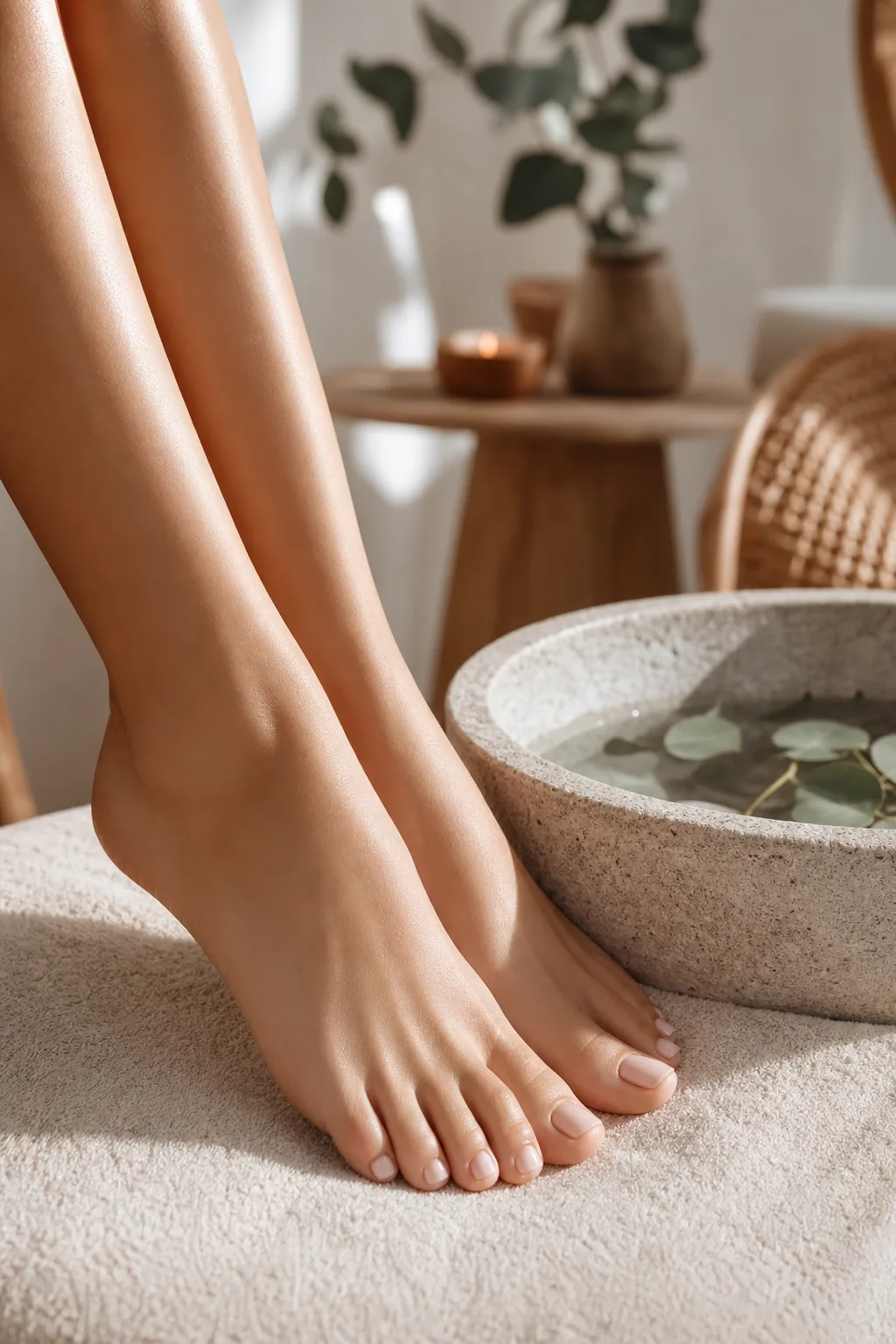
Heel callus work with an e-file is the treatment of hard skin on the foot with precision bits: it reduces the thickened skin on the heel, the sole and the sides of the big toe without blades, without pain and without leaving the skin raw. It is added to a pedicure when there is hard skin and is, by far, what changes the result most on a foot that has gone a while without care.
What heel callus work with an e-file is
It is the treatment of hard skin with a pedicure e-file and bits of different grits, which reduce the dead skin layer by layer until healthy, smooth skin is reached. It does not cut: it polishes. That is why it does not bleed, does not hurt and does not leave that tight-skin feeling blades do.
At nails and the city, heel callus work can be added to any pedicure. The express pedicure with heel callus work takes 45 min and costs €32.90.
How it is done, step by step
- A short foot soak to soften the skin and cleanse.
- Nail and cuticle work, as in any pedicure.
- E-file on the hard skin: first a coarse bit for volume, then a fine one to smooth. Worked dry or slightly damp, never on soaked skin.
- Final polish with a buffing bit or soft file, so the skin is smooth rather than rough.
- Moisturising with a urea cream or oil and, if you like, polish.
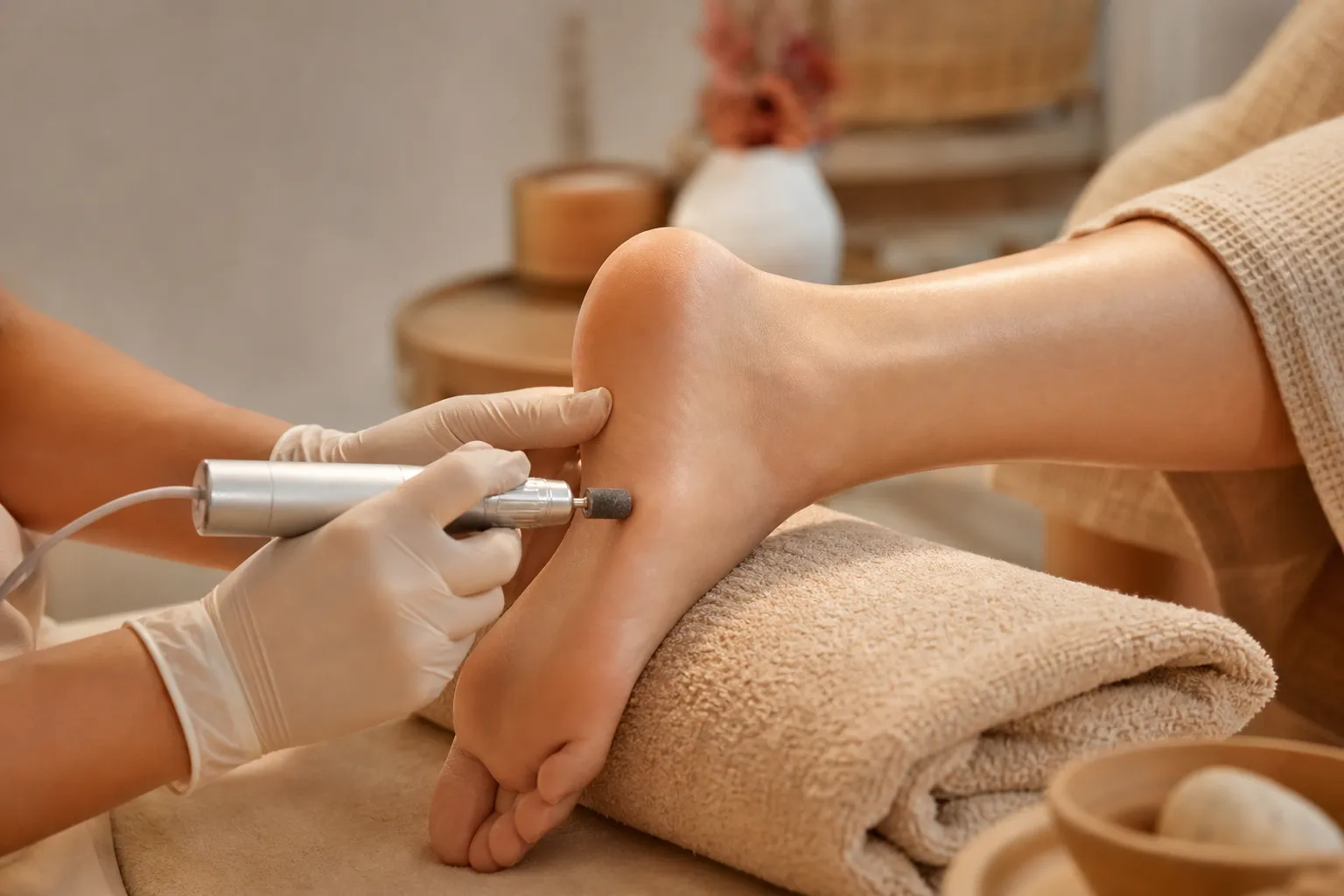
The whole session takes between 45 min and 45 min, depending on the pedicure you choose.
When it is worth adding
If any of these sounds familiar, ask for heel callus work:
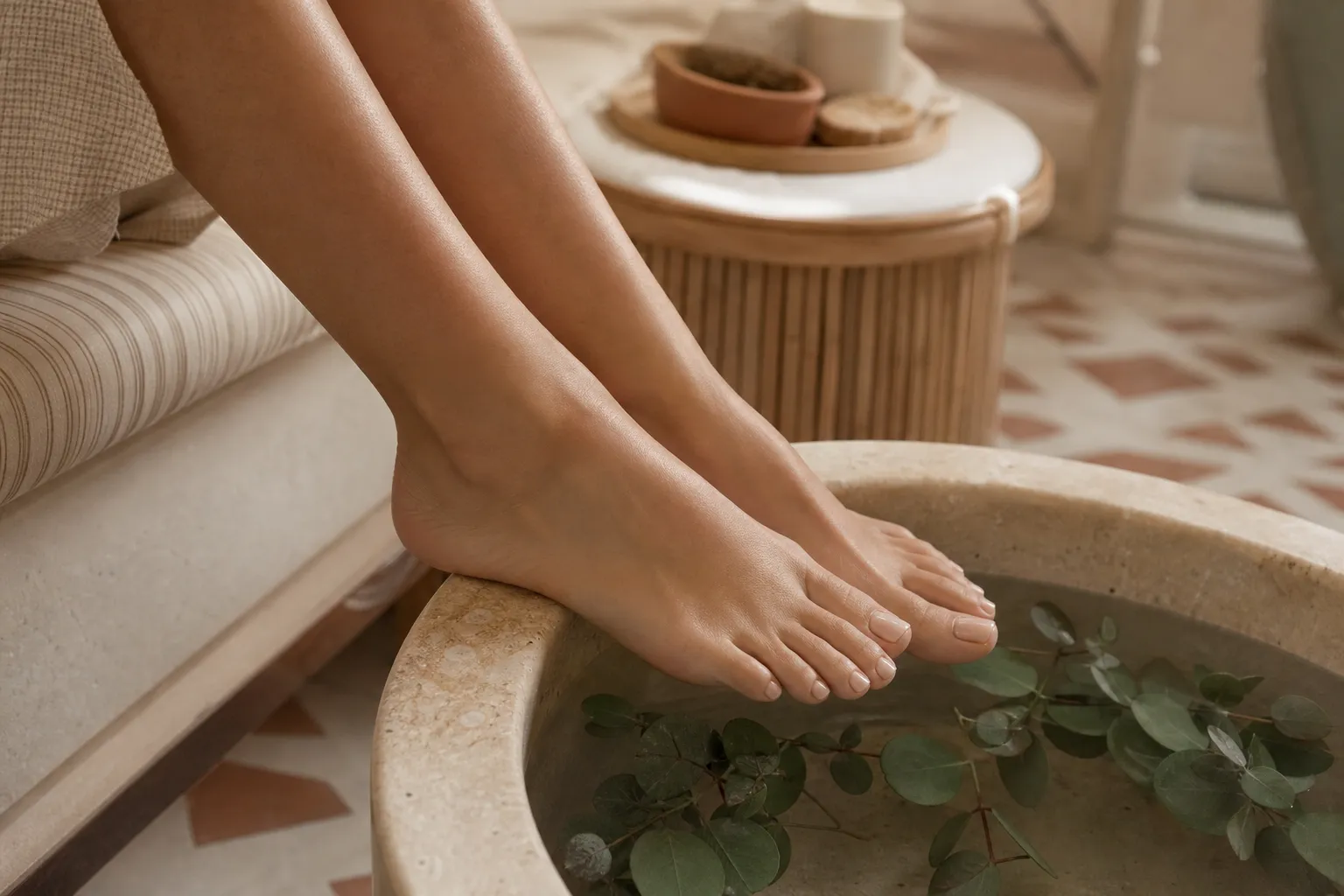
- Rough or cracked heels, especially at the end of summer or in winter with the heating on.
- First pedicure in a long time: built-up hard skin changes the result more than colour does.
- Hard skin on the sole under the toes or on the side of the big toe, from footwear.
- Before an occasion where you will wear sandals.
- Feet that sweat a lot or closed shoes all day, which thicken the skin.
It is not needed if the foot is smooth: then a pedicure without the e-file and good moisturising is enough.
E-file or blade: why we do not use blades
| What you compare | E-file with bits | Blade or scraper |
|---|---|---|
| How it removes hard skin | Polishes it layer by layer | Cuts it off in one go |
| Risk of injury | Minimal | Real, especially on feet with little sensation |
| Feel afterwards | Smooth, soft skin | Tight skin, sometimes stinging |
| Result after two weeks | Hard skin returns slowly and thin | The skin defends itself and comes back thicker |
| Suitable for diabetics or slow circulation | With care, yes | Not recommended |
How often to have it
Every four to six weeks, with your pedicure. Hard skin is the skin's response to friction and pressure, so it comes back; what changes with the e-file is that it comes back more slowly and thinner, because the skin is given no reason to defend itself.
How to keep feet soft between visits
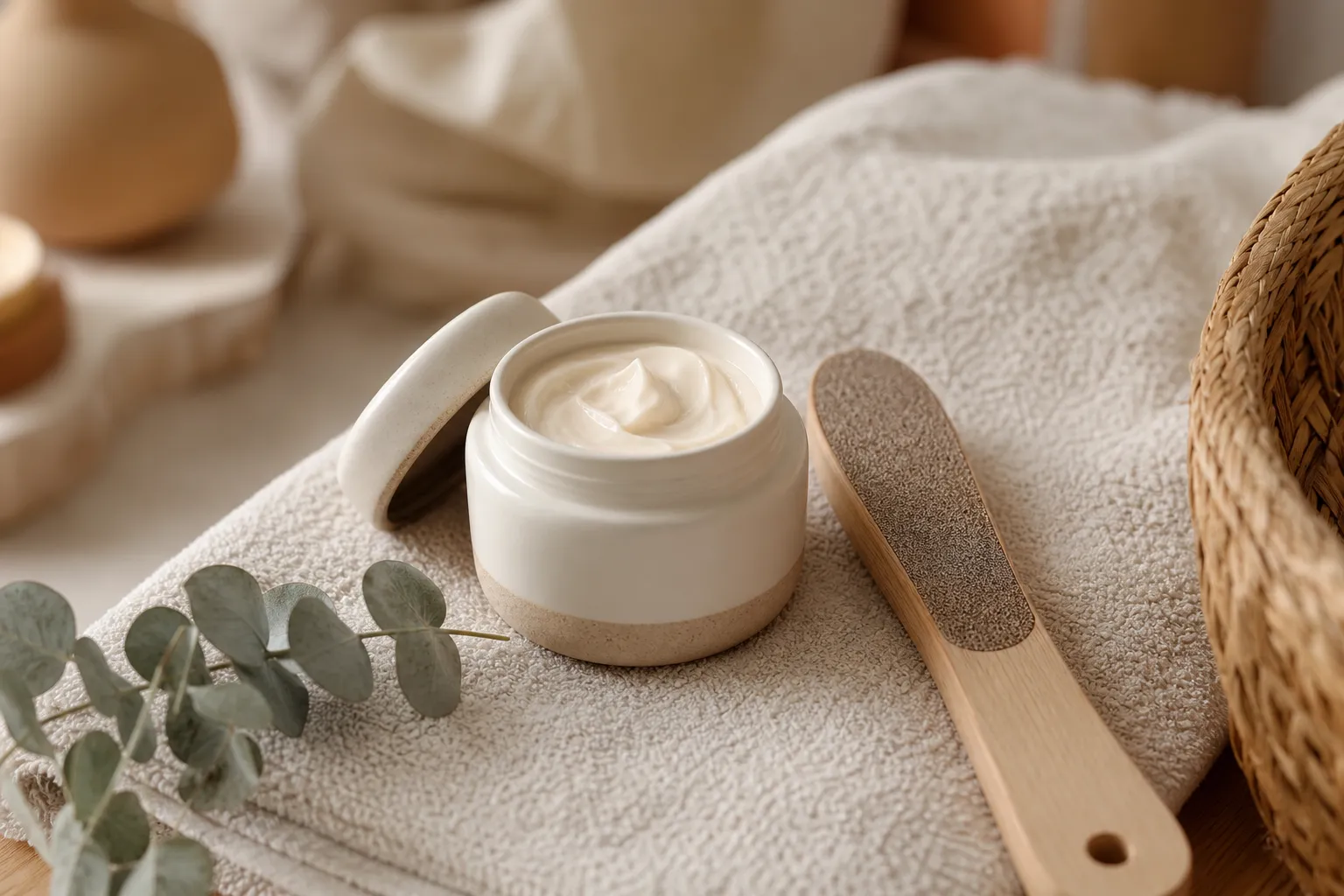
- Cream with 10 to 20% urea every night on heels and soles. It is what extends the result most.
- A soft foot file once a week, dry, only on the heel. Never daily.
- Cotton socks and shoes that do not rub or pinch.
- Dry well between the toes after the shower to avoid fungi, which also thicken the skin. If a nail looks yellow, here is why nails turn yellow.
- Gel polish on the feet: it lasts longer than on the hands, four to six weeks, and protects the nail. We explain it in how long gel polish lasts.
You can book your pedicure through Treatwell and add heel callus work when choosing the service.
Frequently asked questions
Does heel callus work with an e-file hurt?
No. The e-file polishes dead skin layer by layer and stops before reaching sensitive skin. You will feel vibration and gentle warmth, nothing more. It is more comfortable than a blade.
How much does a pedicure with heel callus work cost?
The express pedicure with heel callus work, €32.90; with gel polish, €43.90. Heel callus work can be added to any pedicure on the menu.
How often should hard skin be removed?
Every four to six weeks, with your pedicure. With urea cream every night the result lasts longer and the hard skin comes back thinner.
Can I have heel callus work if I am diabetic?
Yes, with an e-file and with care, precisely because it does not cut. Tell your technician when you arrive so she uses gentler bits and checks the skin. With a blade it would not be advisable.
Does hard skin come back thicker once removed?
With a blade, often yes: the skin defends itself. With an e-file, no: polishing rather than cutting means the skin does not react, and the hard skin returns more slowly and thinner.